Dandruff, Explained: What Causes Those Flakes and How to Calm Them Down
 Ayyan Shahid
You know the moment. You’re about to leave the house, you glance down at a dark jumper or a navy shirt, and there they are: a dusting of white flakes across your shoulders, as if you’ve walked through a small, personal snowstorm. So you brush them off, again, knowing they’ll be back by lunchtime. If you have ever typed how to get rid of dandruff into your phone at midnight, you’re in a great deal of company.
Dandruff is one of the most common scalp complaints there is. It affects teenagers and grandparents, people with oily hair and people with dry hair, the meticulous and the relaxed alike. It isn’t dangerous, it isn’t catching, and it says nothing about how clean you are. But it’s persistent, it is visible, and it has a talent for showing up on the one day you are wearing black.
Here’s the honest shape of it. Dandruff can almost always be controlled, sometimes to the point where you’d forget you ever had it. What it usually won’t do is clear once and vanish forever, because the thing that drives it lives on every healthy scalp. So the real goal is not a cure. It’s a calm scalp, most of the time, with a routine you can actually stick to when flakes flare up again.
Below, we’ll get into what’s happening on your scalp, how to tell plain dandruff from the lookalikes that need different treatment, how anti-dandruff shampoos genuinely work (and why so many people use them wrong), a simple starter routine, the mistakes that keep flakes coming back, and the warning signs that mean it is time to see a doctor rather than buy another bottle. One note before we start: this is general information, not medical advice, and nothing here replaces a pharmacist’s or GP’s opinion about your own scalp.
What dandruff actually is
Your scalp is skin, and like the skin everywhere else on your body, it renews itself constantly. New cells form deep down, drift upwards, and eventually shed from the surface. On a calm scalp that final shedding happens one invisible cell at a time, and you’d never know it was going on.
Dandruff is what happens when that cycle speeds up and gets untidy. Cells are produced faster than usual, they don’t shed neatly, and instead they stick together with scalp oil into clumps big enough to see. Those clumps are the flakes. The faster turnover also explains the itch many people get: an irritated, busy scalp is a reactive one.
So who’s speeding things up? The main character is a yeast called Malassezia. Don’t be put off by the word yeast. Malassezia lives on the oily skin of nearly every adult on the planet, including yours, and most of the time it minds its own business. It feeds on sebum, the natural oil your scalp produces, and as it digests those oils it releases substances (oleic acid is the one usually named) that a lot of people react to. Roughly half of us seem to be sensitive to it. If you’re one of that half, your scalp responds to a perfectly normal microbe as if it were an irritant, and the speed-up begins.
That’s the part people find hard to accept, so it is worth saying plainly: you can’t wash Malassezia away permanently, and you do not need to. It belongs there. The job is to keep its numbers down and your scalp’s reaction quiet, which is a much more achievable aim.
A few more basics while we’re here:
- Dandruff usually starts around puberty, when oil glands switch on properly, and it tends to come and go in phases for years.
- It is slightly more common in men, probably because of differences in oil production.
- It isn’t caused by poor hygiene. You can wash your hair daily and still flake, and the flaking says nothing about your habits.
- It isn’t contagious. You cannot catch dandruff from a partner, a hat or a hairbrush.
- It often looks worse in winter and eases in summer, for reasons we will come to.
Severity runs on a sliding scale. At the mild end there is a dusting of flakes after a skipped wash and very little else. Further along, the itch becomes a daily companion and the flakes arrive whether you washed yesterday or not. At the far end the picture shades into seborrhoeic dermatitis, with redness and greasier, stickier scale. Where you sit on that scale can shift over the years, and it decides how much treatment you need: a light maintenance wash for the mild end, a proper medicated routine for the middle, and professional help when redness and soreness join in.
Dandruff, dry scalp, or something else?
A lot of frustrated shampoo-buying comes down to this: not every white flake is dandruff, and the treatments overlap less than you’d hope. Putting a strong medicated shampoo on a dry, sensitive scalp can make things worse, while moisturising a yeast-driven scalp feeds the problem. So it pays to look closely at your own flakes before you shop.
Before you decide, take a proper look. Part your hair in a few places under a decent light and check three things. First, the flakes themselves: are they loose and dry, or greasy and stuck down? Second, the skin underneath: calm and normal-coloured, pink and angry, or hidden under thick scale? Third, the map: is it only the scalp, or are your eyebrows, ears and chest involved as well? Those three answers sort most people into the right category most of the time, and they give a pharmacist or GP a head start if you end up describing it all to one of them.
Plain dandruff. Flakes are white or slightly yellowish, loose, and they fall easily onto your shoulders. Your scalp might feel normal or a bit oily rather than tight and dry. There’s often mild itch, mostly on the scalp itself, and things worsen when you go longer between washes.
Dry scalp. The flakes here are smaller, whiter and drier, like dust rather than crumbs. The bigger clue is the rest of you: if your shins, forearms and face are also dry and tight, your scalp is probably joining in. Dry scalp is worse in winter, with central heating, hot showers and harsh shampoos, and it tends to settle when you wash a little more gently and less often. It has nothing much to do with yeast.
Seborrhoeic dermatitis. Think of this as dandruff’s bigger, redder relative. Many dermatologists treat dandruff as the mild end of the same spectrum. Here the scales are greasier and more yellow, they stick to skin that’s pink or red underneath, and they don’t keep to the scalp. Eyebrows, the creases beside your nose, behind your ears, the centre of your chest and skin folds can all join in. In babies, the same condition on the scalp is cradle cap, and it’s extremely common and usually harmless.
Scalp psoriasis. This looks different once you know what to look for. The scale is thicker and silvery, it sits on clearly defined raised patches, and it often creeps just past the hairline onto the forehead or behind the ears. If you also have plaques on your elbows or knees, or pitted and thickened nails, psoriasis moves up the list. Anti-dandruff shampoo alone rarely settles it, and it deserves a proper diagnosis.
Irritation or eczema. An itchy, sore or even weepy scalp that flared after a new shampoo, hair dye or styling product is often a reaction rather than dandruff. The itch tends to be stronger than the flaking, and the timing gives it away.
Scalp ringworm (tinea capitis). This one matters because it is mostly seen in children and it is contagious. Look for a round scaly patch where hairs have broken off or fallen out. Shampoo alone will not cure it; it needs a GP and antifungal tablets, so don’t spend months trying bottles first.
If your picture doesn’t match plain dandruff at all, that is useful information, not a failure. A pharmacist can often sort the lookalikes out in a two-minute conversation, and a GP definitely can.
Why it flares up when it does
Ask anyone with dandruff and they’ll tell you it has moods. Fine for a month, then a week of snow on every collar. Some of that randomness is real, but a few triggers turn up again and again.
Cold, dry weather. Winter is the classic flare season. Cold air holds less moisture, indoor heating dries skin out further, and many of us quietly wash our hair less often in January because getting out of a warm shower is miserable. Less washing means more oil on the scalp, and more oil means more food for Malassezia. The yeast doesn’t hibernate. Quite the opposite.
Going too long between washes. Whatever your hair type, there is a gap length where oil and cells build up enough to feed a flare. For some people that’s two days; for others it’s two weeks. The trick is learning your own number rather than following someone else’s rules.
Stress and being run down. Stress does not cause dandruff from nothing, and anyone who claims it does is oversimplifying. But plenty of people notice their scalp flares during exam season, a new job, poor sleep or illness, and there are sensible reasons why: stress and exhaustion affect both oil production and how reactive your skin is. It is not in your head. Well, it is, but only geographically.
Oil, hormones and age. Dandruff follows oil. It starts at puberty, it is often at its busiest in younger and middle-aged adults, and it can flare with hormonal shifts. Oily scalps aren’t dirty scalps, but they are well-stocked restaurants as far as this yeast is concerned.
Irritation from products. Strong detergents, heavily fragranced products, frequent bleach or dye, and very hot water can all rough up the scalp’s barrier. An irritated scalp sheds faster and reacts more, which pours fuel on a yeast problem that was happily simmering. Sometimes the thing you’ve been using more of, in a panic about flakes, is part of why the flakes are worse.
None of this means you can prevent every flare by living perfectly. You can’t. It means that when a flare arrives, it is worth a quick audit of the last fortnight before you blame the shampoo.
How to get rid of dandruff: start with the shampoo
Most people treat dandruff with whatever bottle they grabbed in a hurry, use it like ordinary shampoo for ten seconds, see no change, and conclude that nothing works. The products aren’t usually the weak link. The technique is. But the ingredient matters too, because the main ingredients do genuinely different jobs.
Ketoconazole is an antifungal, and it goes straight at the yeast. Shampoos containing it are usually used twice a week for the first few weeks, then dropped back to once a week or so to keep things quiet. It is a common first recommendation from pharmacists and dermatologists because it works well for a lot of people. Read the label for your product’s exact pattern, since strengths vary.
Zinc pyrithione is also antifungal and antibacterial, and it seems to help normalise the speeded-up cell turnover too. It’s generally gentle enough for frequent use, which made it a staple of everyday anti-dandruff shampoos for decades. One wrinkle: cosmetic rules differ between countries, and it has been removed from cosmetic products in the EU, so depending on where you live it may be easy to find or nowhere to be seen. Check the ingredients list rather than the front of the bottle.
Selenium sulphide slows down the rapid cell production and has antifungal action as well. It can be very effective on stubborn, greasier flaking. It does have quirks. It can smell a bit medicinal, it needs thorough rinsing, and if it lingers on light, grey or chemically treated hair it can cause discolouration. Treat it with a bit of respect and it behaves.
Salicylic acid doesn’t fight yeast at all. It is a keratolytic, which is a long word for something simple: it loosens the bonds between dead cells so thick scale can wash away instead of sitting there in plates. That makes it a good partner ingredient when build-up is the main problem, though it can be drying if you lean on it daily.
Coal tar slows the overproduction of skin cells, which is why it is often used where scale is thick and psoriasis-like. It has a distinctive smoky smell that divides people sharply. It can also discolour fair or grey hair, stain fabrics, and make your scalp more sensitive to sunlight, and it shouldn’t go on broken or very inflamed skin. None of that makes it a bad ingredient. It makes it one to choose deliberately, with the label read first.
How do you pick? Honestly, most people start with whichever of the well-established antifungal ingredients is easy to buy where they live, use it properly for a few weeks, and then judge. Guidance from the NHS and the British Association of Dermatologists boils down to something refreshingly undramatic: if the first ingredient doesn’t help after a fair trial, try a shampoo with a different one. Rotating between two different active ingredients, a week or a month at a time, is a perfectly sensible strategy when one alone stops pulling its weight.
And a warning that saves money: the medicated shampoo is the treatment, but more expensive does not mean more effective. The active ingredient and how you use it count for far more than the branding around it.
The step everyone skips: leaving it on
Here’s the unglamorous secret of the whole business. Anti-dandruff shampoo needs contact time with your scalp to work, and most people give it about fifteen seconds.
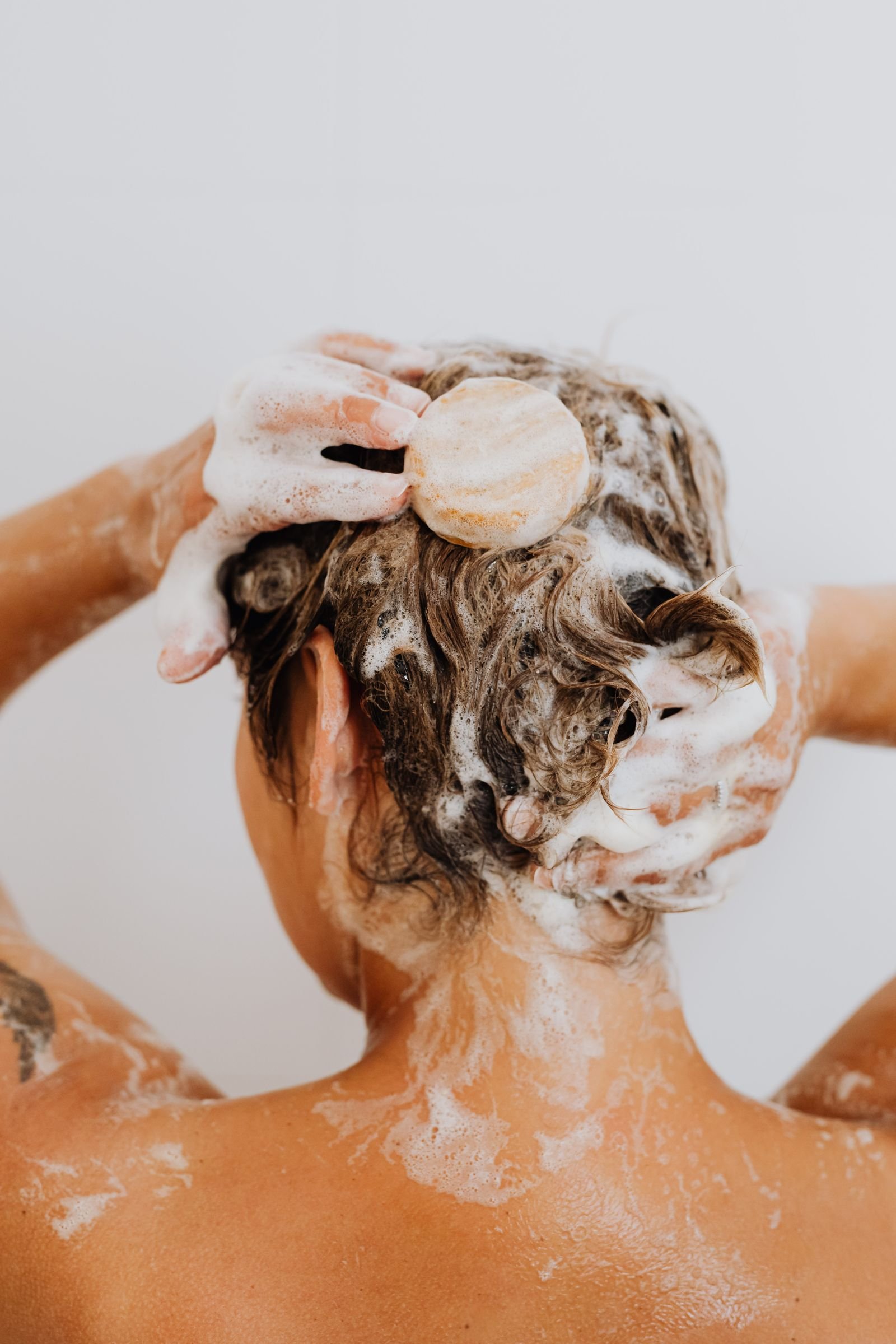
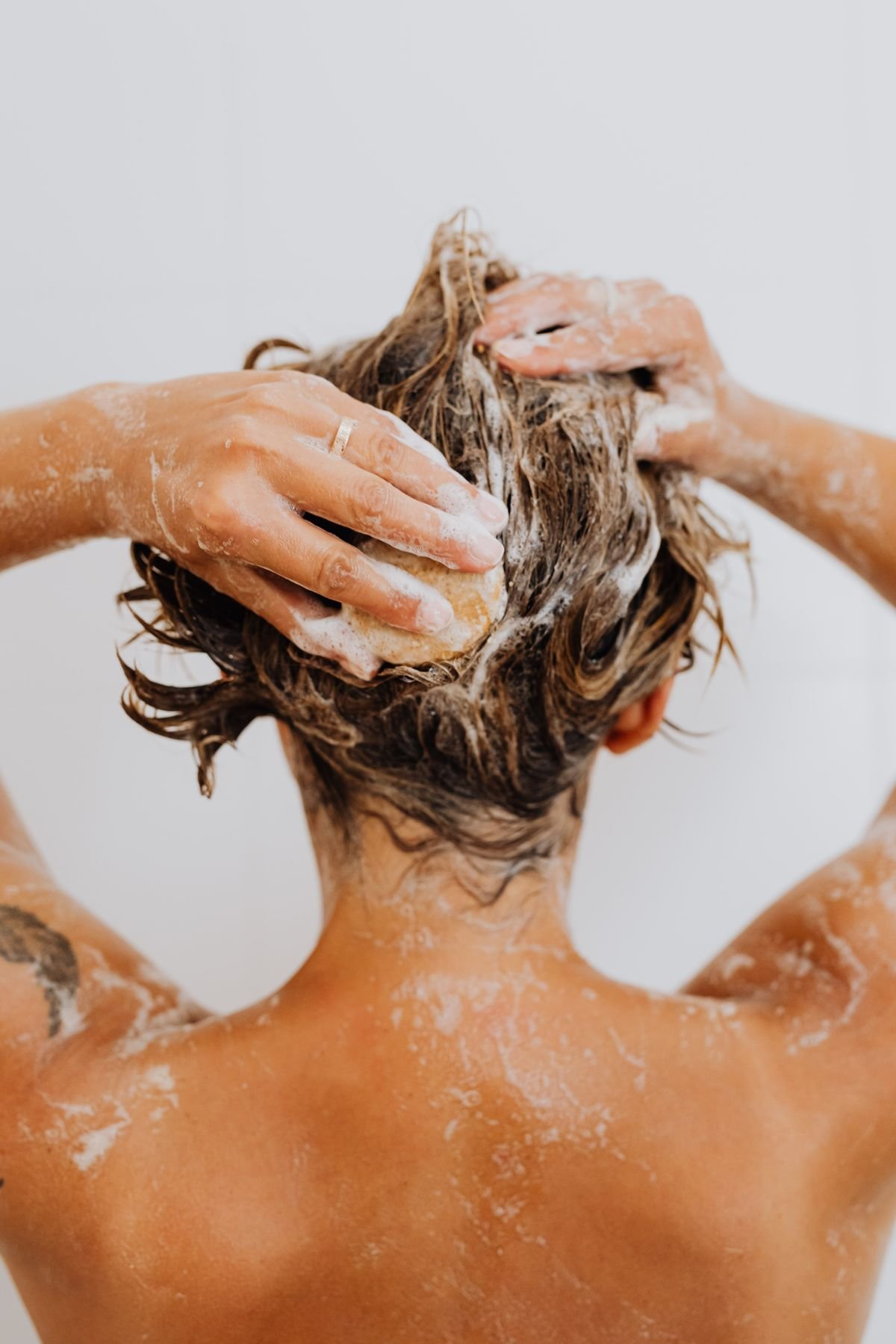
The yeast lives on the skin of your scalp, not on the lengths of your hair, so the shampoo’s job is on the skin. Massage it into the scalp itself, all over, with your fingertips (not your nails, which scratch and stir up more irritation). Then leave the lather sitting there for three to five minutes before you rinse. Shower time passes either way; wash your face, count something, sing something. After a few weeks of doing this, people often find the shampoo that “did nothing” suddenly does quite a lot.
A few more technique points that make a real difference:
- Rinse with lukewarm water, thoroughly. Scalding water irritates the scalp, and leftover product can irritate it too.
- If your hair is long, thick or genuinely oily, a double wash can help: the first pass lifts oil and build-up, the second actually treats.
- Keep conditioner on the lengths and ends rather than massaging it into the scalp, where it can add to the greasy build-up between washes.
- During a flare, wash more often, not less. For many people with straighter or oilier hair that means washing most days, using the medicated shampoo two or three times a week and a gentle ordinary shampoo in between. If your hair is curly, coily or very dry, once a week is a more realistic rhythm; in that case make the wash count, working the medicated shampoo into the scalp well and giving it its full leave-on time. Dermatology advice for Black hair types generally follows exactly that weekly pattern.
Scalp serums, scrubs and leave-on treatments: are they worth it?
The shelves are full of extras, and most of them are optional. Leave-on antifungal lotions and foams do exist, and a pharmacist may suggest one for a stubborn flare that shampoo alone is not shifting; they have the advantage of staying in contact with the skin for hours rather than minutes. Physical scalp scrubs are more cosmetic than medical. They can lift loose scale and make the scalp feel cleaner, but vigorous scrubbing irritates the very skin you are trying to calm, and no scrub treats the yeast. If you enjoy one, use it gently and rarely, and let the medicated shampoo do the real work. As for the long list of tonics, boosters and overnight oils, the evidence behind most of them is thin, and several work against you by adding oil to the scalp. One good treatment, used properly, beats five hopeful extras used at random.
A simple starter routine for the next few weeks
You do not need a spreadsheet, a shelf of products or a twelve-step ritual. You need one medicated shampoo, one gentle ordinary shampoo, and a bit of patience. Here’s a pattern that suits most people; adjust the wash frequency to your hair type as described above.
Weeks 1 and 2: settle the flare. Use the medicated shampoo two or three times a week, massaging it into the scalp and leaving it on for three to five minutes each time. Wash with the gentle shampoo on the other wash days if you wash more often. That’s it. Resist the urge to add oils, scrubs and tonics at the same time, because if your scalp improves (or complains) you won’t know what did it.
Weeks 3 and 4: hold the line. By now most people who are going to respond see clear improvement: fewer flakes, less itch, collars staying clean. Drop the medicated shampoo to once or twice a week and keep the leave-on time in place. This is exactly the point where many routines die, because the scalp looks fine and the special shampoo feels unnecessary. Don’t retire it yet.
From week 5 onwards: maintenance. Dandruff is controlled, not cured, so the long game is a quiet maintenance rhythm: the medicated shampoo once a week, or once a fortnight if your scalp stays calm, with ordinary washing in between. If a flare brews up (a stressful fortnight, a cold snap, a lazy spell of skipped washes), simply step back up to the weeks 1 and 2 pattern for a while. No drama, no starting from scratch.
Judge progress by your shoulders and your itch, not by the mirror after every wash. Expect real change over two to four weeks, not two days. Skin works on a calendar, not on your schedule, and the scalp is no exception.
It also helps to think a season ahead. If your scalp reliably falls apart in November, do not wait for the first dark-jumper disaster. Restart the maintenance washes in October, just as the heating goes on and the air starts drying out, and the flare may never get going. The same applies to any stretch you know is hard on you: a run of night shifts, exam season, the first weeks after a baby arrives. Dandruff management is mostly rhythm, and rhythm is far easier to keep than to rebuild.
Mistakes that keep the flakes coming back
Some of these are obvious once someone points them out. Most of us have done at least three.
Rinsing the treatment straight off. Covered above, but it earns its place at the top of this list too. Ten seconds of contact is a rinse, not a treatment.
Stopping the moment you look clear. The flakes disappearing means the routine is working, not that it is finished. Stop entirely and the yeast population rebuilds, the reaction returns, and you’re back at the shop wondering why the shampoo “stopped working”. It didn’t. The maintenance did.
Scratching and picking. An itchy scalp begs to be scratched, and scratching breaks the skin, invites soreness and infection, and snaps hairs off at the surface. Picking at scale does the same damage in slow motion. If the itch is that insistent, that is information to take to a pharmacist or GP, not a challenge to your fingernails.
Soaking the scalp in oil. This one surprises people, because oiling the scalp feels like care. But Malassezia feeds on oils, including many of the natural ones people massage in hopefully, like coconut and olive oil. For a lot of people with dandruff, regular scalp oiling is feeding the problem. Oil on the dry lengths and ends of your hair is a separate matter and perfectly fine. Keep it off the scalp while you are trying to calm a flare.
Washing less to “let the scalp rest”. Skipping washes out of fear of drying things out usually backfires, because oil and shed cells accumulate into a buffet. The fix for a scalp that feels dry and irritated is a gentler product and better technique, not longer gaps, unless your hair type genuinely needs them.
Kitchen remedies with confident promises. Lemon juice, baking soda, vinegar rinses and undiluted essential oils all have enthusiastic supporters online. The evidence behind them is thin, and the irritation risk is not. A diluted vinegar rinse will not do anything meaningful to the yeast, baking soda is harsh enough to leave your scalp and hair furious, and neat tea tree oil can cause reactions of its own. (Properly formulated products that contain these ingredients are a different story, but the bathroom chemistry experiment is rarely worth it.)
Switching products every few days. No ingredient gets a fair trial in three washes. Give each one at least three to four weeks of correct use before you decide it isn’t for you. The exception, obviously, is anything that stings, burns or makes the itch sharply worse. Stop that at once.
Letting styling products camp on the scalp. Dry shampoo (the irony), waxes, gels and heavy sprays build up between washes, and build-up traps oil and scale against the skin. Use what you like, but keep it mostly on the hair, and make sure wash day actually removes it.
Small habits that help more than you’d expect
None of these will fix dandruff on their own, and anyone who says otherwise is selling something. But they shave the edges off the problem, and they cost nothing.
Brush your hair gently before you wash it. Loose flakes that are ready to shed come away on the brush instead of migrating to your shoulders later, and it makes the wash itself more effective. While you’re at it, wash your brushes and combs now and then. They collect flakes, oil and old product, and otherwise you’re combing yesterday’s build-up back onto a clean scalp.
Let your scalp dry properly after washing. Tying up damp hair, or sleeping on it wet night after night, keeps the scalp warm and moist for hours, which is exactly the environment yeast enjoys. A few extra minutes with a towel or a cool dryer setting makes a difference.
Rinse sweat off when you can. After workouts, hot days and long spells under hats or helmets, a rinse or a wash keeps the oil-and-sweat mixture from sitting on the scalp for half a day. And keep your hands off your head when you notice them wandering there. Absent-minded scalp-scratching during a long meeting undoes a surprising amount of good work.
When flakes show up alongside shedding
Sometimes the worry isn’t really the flakes. It’s the flakes plus the hair in the brush. So let’s separate the two things clearly: ordinary dandruff doesn’t cause baldness, and it doesn’t damage follicles. What it can do is start a background of itching and scratching that breaks individual hairs at the surface, which makes your hair look thinner and more fragile than it is, especially along the parting.
It is also worth checking the pattern of what you are seeing. Flakes plus an itchy scalp plus hair that looks dull and snaps easily usually point back to the scratching and the build-up. Hair coming out from the root in handfuls, a widening parting, or visible patches with bare skin are a different story, and dandruff is rarely the main suspect in any of them.
There’s also overlap in the other direction. A genuinely inflamed scalp, the seborrhoeic dermatitis or psoriasis end of things, deserves treatment in its own right, and if you are losing hair in patches, or shedding heavily while your scalp is sore and scaly, that’s a combination a GP should see rather than a shampoo aisle. If you’re noticing more shedding generally, we’ve covered the common causes and the patterns worth tracking in our guide to hair shedding and thinning hair, which sits alongside this one.
When it’s time to see a GP or dermatologist
Most dandruff responds to a decent routine and a bit of patience. But some situations are worth a professional opinion, and sooner rather than later.
- The scalp is very sore, red, swollen or broken, or there are signs of infection, like weeping, crusting or pus.
- Two or three different anti-dandruff ingredients, used properly for a month each, have made no difference.
- The scale is thick, silvered and tightly stuck down, or patches appear beyond the hairline on the face, neck or ears.
- There are patches of hair loss, broken hairs, or a single area that is thinning sharply.
- The problem appeared suddenly and dramatically in an adult, especially alongside new medicines, illness or a major health change.
- Children have widespread, painful or infected scalp problems, or a child’s scalp is flaking with bald patches. Ringworm needs treatment, and quickly, because it spreads.
- The flaking is affecting your sleep, your work or your mood in a real way. That counts as a reason. Scalp problems are not trivial just because they aren’t dangerous.
A pharmacist can help a lot before this point: over-the-counter shampoos are their bread and butter, and they can tell you whether a stronger product or a GP visit is the next step. What a clinician can add is a diagnosis, a look with proper lighting and, if needed, stronger antifungal or anti-inflammatory treatments, including prescriptions for seborrhoeic dermatitis or psoriasis. In short, if the pattern doesn’t match the dandruff described here, or the problem keeps outrunning the shampoo, stop guessing.
Frequently asked questions
Is dandruff contagious?
No. You cannot catch it from a hat, a brush, a pillow or a partner. The yeast is already part of everyone’s normal skin flora. Dandruff is about how your individual skin responds to it, not about picking up a bug.
How often should I wash my hair if I have dandruff?
During a flare, more often than feels polite. If your hair is straight, wavy or oily, that usually means most days. If your hair is curly, coily, very dry or tightly textured, weekly washing is the standard pattern and it works fine, provided the medicated shampoo is massaged well into the scalp and given its leave-on time. Let the scalp’s oil and comfort guide you, not a rule from a different hair type.
Does dandruff cause hair loss?
Not in the way people fear. Dandruff itself doesn’t kill follicles or cause baldness. Aggressive scratching can snap hairs at the surface and make hair look thinner, and severe inflammation like scalp psoriasis is a separate condition worth treating. If you’re losing hair in patches or handfuls, that’s not ordinary dandruff and it’s worth getting checked.
Can what I eat make dandruff better or worse?
There is no diet that cures dandruff, and anyone promising one is selling something. Deficiencies and extreme diets can show up on skin, and a generally healthy, varied diet supports skin overall, but no single food reliably triggers or fixes flakes. If you notice alcohol or a very high-sugar stretch coinciding with worse flares, that’s worth noting for yourself, but it isn’t a rule to build a life around.
Will it ever go away for good?
Honest answer: probably not forever, but that’s not a gloomy answer. For most people it goes quiet for long stretches with a simple maintenance routine and pops back up when the conditions line up against them. Many people find it calms down a lot in their fifties and sixties as oil production eases. Either way, the routine stays the same and stays easy.
Can children get dandruff?
Children can develop a scaly scalp, but the cause is not always plain dandruff. Babies get cradle cap, which is related but different, and school-aged children with patchy, scaly scalps need checking for ringworm, which is an actual infection and needs proper treatment. If a child’s scalp problem is painful, spreading or causing hair loss, see a GP promptly rather than trying adult anti-dandruff shampoos.
Flakes are stubborn, not shameful
It is worth saying something about the other half of dandruff, the one that has nothing to do with yeast. It is quietly humiliating. People check their shoulders in lifts, avoid dark clothes for job interviews, skip swimming, stand in the back of photographs. None of that is vanity. It is a visible condition in a world that reads flakes as carelessness, and the shame makes people do the worst possible things: wash less, wear hats all day, hide the scalp from air and light.
So here’s the reframe that helps: dandruff is a common, manageable skin condition, roughly as embarrassing as a runny nose in winter, and nobody sensible judges you for it. Tell a pharmacist. Tell your barber or hairdresser. They have seen it a thousand times, and they will not flinch. The people who do judge are rare, and they are wrong.
And remember the timeline. Most people who follow a proper routine — the right ingredient, proper leave-on time, steady maintenance — end up with a scalp that stays quiet for weeks at a time. The flakes don’t disappear because you found a miracle. They disappear because you stopped fighting your scalp and started working with it. That is the whole secret, and it is a lot less dramatic than the shelves of miracle bottles would have you believe.
Disclaimer
This article is for general information only and is not a substitute for medical advice. If your scalp is painful, broken, infected, or not improving with over-the-counter treatment, or if you’re losing hair in patches, speak to a pharmacist, GP or dermatologist. Always follow the label instructions on any medicated product.
Sources
Information in this article is consistent with guidance from:
- American Academy of Dermatology — advice on dandruff and seborrhoeic dermatitis
- NHS — dandruff overview and self-care guidance
- British Association of Dermatologists — patient information on seborrhoeic dermatitis
- Mayo Clinic — dandruff symptoms, causes and treatment overview