Hormonal Acne: How to Tell If Your Breakouts Follow a Pattern — and What Actually Helps
 Ayyan Shahid
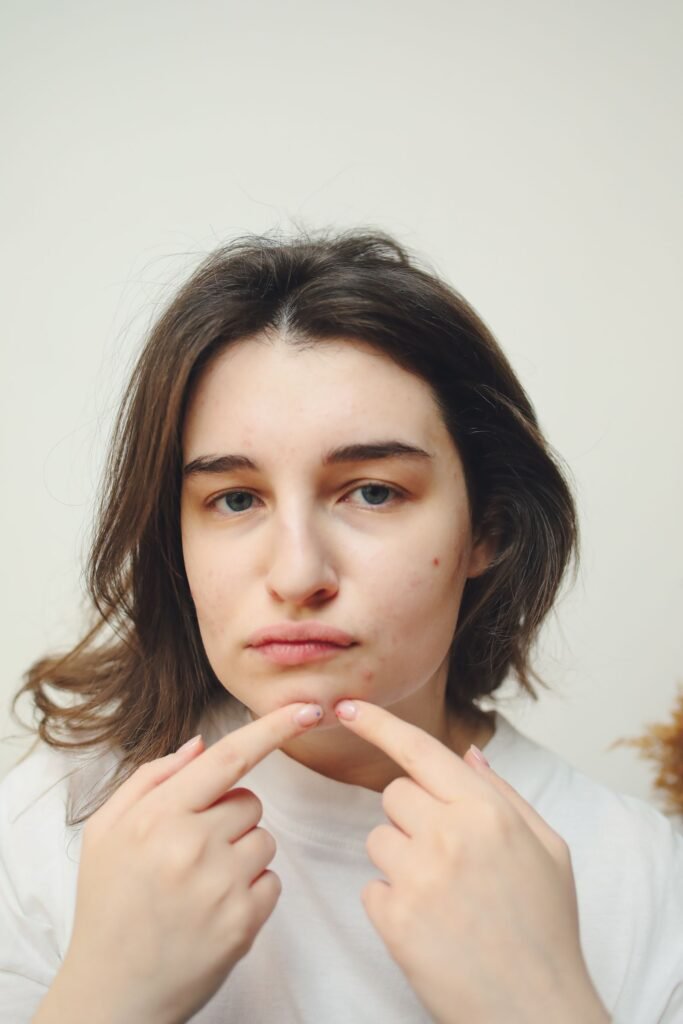
It's always the same patch of chin. Not the whole face, not a random scattering, just that stubborn cluster along the jaw that turns up like it has a calendar. You can set your watch by it some months: skin behaves itself for two good weeks, then a deep, sore lump starts forming under the surface, followed by two friends. By the time they've finally faded, the next round is warming up.
If that sounds familiar, you're not imagining the pattern, and you're not dealing with a dirty face or a failed moisturiser. A lot of adult breakouts follow the rhythm of your hormones, and once you can see the rhythm, the whole thing becomes much easier to manage. Not easy to erase, mind. Easier to manage honestly.
This guide walks through how to tell whether your breakouts follow a hormonal pattern, what's actually driving them under the skin, and which parts of the usual advice genuinely help. It also covers the parts that are mostly marketing, because hormonal acne attracts more nonsense than almost any other skin topic. Along the way it is worth reading alongside our acne causes and types guide, which explains the basic mechanics of a spot (blocked pore, oil, bacteria, inflammation) in more detail. That groundwork matters here, because hormonal acne isn't a different species of spot. It's ordinary acne with a particular trigger pulling the strings.
The pattern most people miss
Hormonal acne rarely announces itself with a label. You have to spot the pattern yourself, and there are four clues that tend to show up together.
Where the spots land
The classic territory is the lower third of the face: chin, jawline, around the mouth, and sometimes down onto the neck. Teenage acne loves the forehead and nose, where oil glands are densest. Adult hormonal breakouts tend to settle lower, and they often sit deeper too. Instead of lots of small surface whiteheads, you get fewer, larger, tender bumps that live under the skin for days before they do anything. Some never properly come to a head at all. They just swell, ache, turn red, and slowly deflate, leaving a flat mark that outstays its welcome.
That depth is part of why these spots feel so unfair. A surface spot is a two or three day event. A deep jawline cyst can run a fortnight from first twinge to final fade, and if a new one starts every week or so, your chin never really gets a clear run.
When they turn up
Timing is the second clue, and for many women it is the loudest one. Breakouts that flare in the week before a period, calm down once it's underway, then build again towards the next one are following the menstrual cycle almost by definition. Oestrogen and progesterone rise and fall across the month, and in the run-up to a period the balance tips in a way that suits oil glands and inflammation. If your skin diary (even a rough mental one) shows flares landing in the same week most months, that's not coincidence.
Pregnancy, coming off the pill, starting a new contraceptive, and the years before menopause can all reshuffle the pattern too. Plenty of people say the same thing in different words: my skin was fine until I changed something hormonal, and then my chin went rogue.
Your age, and the "I thought I'd grown out of this" factor
Adult acne is strikingly common, and it is not a sign you've failed at skincare. Dermatology surveys keep finding that a large share of women in their thirties and forties deal with breakouts, many of them for the first time since their teens, and some for the first time ever. If your spots started or restarted well into adulthood, and they favour your jaw over your T-zone, hormones move up the list of suspects.
What the spots leave behind
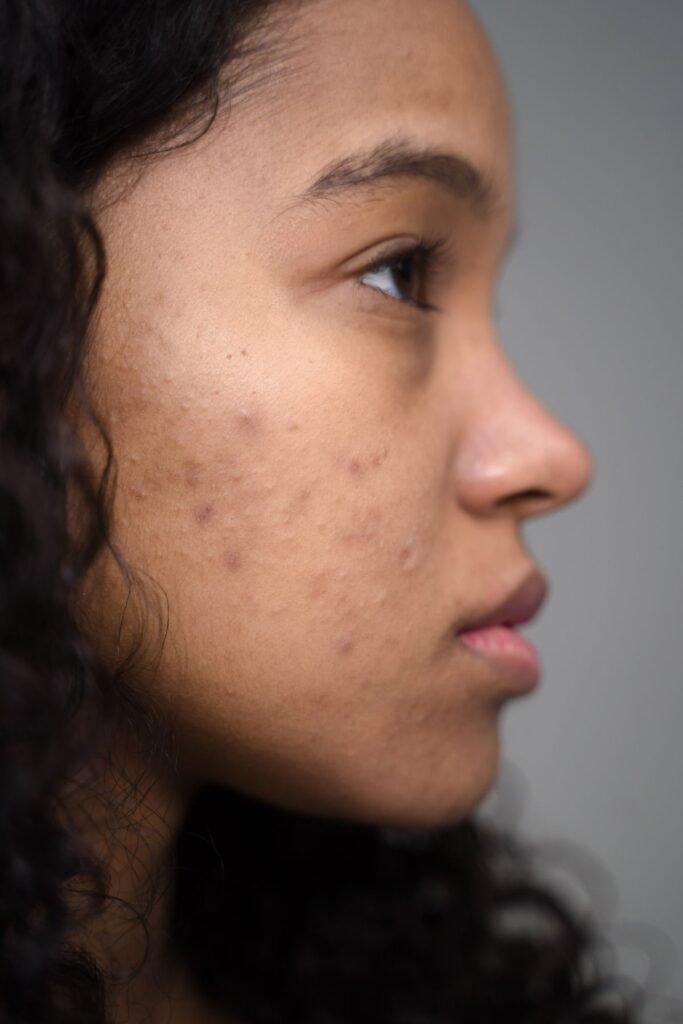
Hormonal breakouts often leave flat brown or red marks that hang around for weeks after the spot itself has gone. That is post-inflammatory pigmentation and lingering redness rather than true scarring, and it is maddening because it makes the skin look active even in a quiet week. Deeper cysts can leave real texture changes or small dents if they're picked at, which is one reason the squeezing habit does so much damage with this type in particular. A spot you can't reach properly is a spot you shouldn't be excavating with your fingernails at midnight. It never ends well.
None of these clues on their own proves anything. Forehead acne can be hormonal and jawline acne can be plain bad luck or a reaction to a new product. It's the combination (place, timing, age, depth) that builds the case. If three or four of them describe you, you're probably looking at a hormonal pattern, and that changes what you should expect from treatment.
Why hormones stir things up under the skin
A spot needs four things to form: oil, sticky dead skin cells blocking a pore, bacteria that enjoy that environment, and inflammation. Hormones mostly intervene at step one. They turn the oil tap up.
The hormones in question are mainly androgens, a group that includes testosterone. Everyone produces them, women included, and your oil glands are very attentive to them. When androgen levels rise, or when your glands are simply more sensitive to a normal level, the glands produce more sebum. More sebum means pores block more easily and the bacteria involved in acne (Cutibacterium acnes, a normal skin resident) have more to feed on. The pore walls get irritated, the immune system piles in, and you've got a deep, angry bump instead of a quiet blocked pore.
Two points in that paragraph matter more than they look.
First, your hormone levels don't have to be abnormal. Blood tests in people with hormonal acne often come back completely normal. The issue is frequently sensitivity: glands that over-respond to an ordinary hormonal signal. That's why "but my hormone test was fine" and "my acne is clearly hormonal" can both be true at once.
Second, the monthly timing isn't about hormones suddenly flooding your body. It is about ratios shifting. In the second half of the cycle, progesterone rises, and just before a period both oestrogen and progesterone drop. The oil glands notice the changing balance, and skin tends to flare in that pre-period window. Stress hormones can pile on as well. Cortisol doesn't cause acne by itself, but a rough month with poor sleep and high stress often shows up on your face a week or two later, and it's hard to separate the stress from the cycle because life rarely schedules them apart.
Certain situations genuinely do push androgens higher and deserve proper medical attention rather than a skincare routine. Polycystic ovary syndrome (PCOS) is the well-known one, and it often travels with irregular periods, thinning hair on the scalp, extra hair growth on the face or body, and weight that is hard to shift. Some medicines can drive acne too, including certain steroids and lithium. And very sudden, severe adult acne appearing almost overnight is unusual enough that a doctor should look at it. We'll come back to all of that in the section on seeing a professional, because there's a real difference between "my chin flares monthly" and "something in my body has changed".
For most people reading this, though, the drivers are ordinary: a monthly hormonal rhythm, glands that respond strongly to it, and modern life layered on top. That's less dramatic than the internet likes to make it. It is also, in a way, reassuring. There's no mystery toxin to hunt down. There's a pattern to work with.
What a month actually looks like on hormonal skin
It can help to know the shape of a typical cycle, because a lot of people judge their skin on the wrong week and draw the wrong conclusion. Cycles vary, and plenty of readers will not have a textbook 28 days to work with, but the broad pattern goes like this.
In the week after a period ends, skin is often at its calmest. Hormone levels are relatively steady, oil production is at its monthly low, and existing spots get a chance to heal without reinforcements arriving. This is the week where every new product looks like a miracle. It is also the week that fools people into abandoning treatments, on the grounds that the problem has clearly gone away by itself.
Mid-cycle, around ovulation, oil production starts to climb. Most people notice nothing more dramatic than a slightly shinier forehead and perhaps one small spot that behaves itself. Under the surface, though, pores are busier and blockages are forming. The deep lump that ruins your plans at the end of the month usually began life quietly around now, which is why prevention has to run all month rather than starting when a spot appears.
The week before a period is when the pattern declares itself. Oil is up, skin is often more reactive and sensitive in general, and the blockages formed earlier in the month become inflamed. Spots that appear in this window tend to be the deep, tender kind, and they cluster on the chin and jaw because that is where the most hormone-responsive glands seem to sit. Skin can also look generally worse in this week for reasons that have nothing to do with spots: water retention, poorer sleep, and a shorter temper with the mirror.
Once the period starts, hormone levels settle and the flare usually begins to calm. Spots stop arriving, the existing ones deflate, and the marks they leave behind become the main complaint. Then the wheel turns again.
Two variations are worth knowing. After stopping hormonal contraception, some people get a delayed flare three to six months later, as their natural cycle reasserts itself and androgen effects on the skin become more noticeable. This catches people out because the timing feels disconnected from the change that caused it. And in the years approaching menopause, cycles become less predictable, so the pattern of flares becomes less predictable too. The spots keep the same address (chin, jaw, neck) even when they lose their timetable. If your once-reliable monthly rhythm has become erratic in your forties, that is a recognisable pattern in itself, and it is worth mentioning to a GP alongside any other symptoms.
The point of mapping all of this is not to become a full-time analyst of your own face. It is to stop two common errors: judging a treatment during flare week, when almost nothing looks effective, and crediting a new product for the calm week that was coming anyway. Judge everything at the same point in two or three consecutive cycles, and the signal finally separates from the noise.
What genuinely helps: the topical basics
Here's the honest starting point. Over-the-counter skincare can do a lot for the pore-blocking and inflammation side of acne, and for mild to moderate hormonal breakouts it can bring things down to a level most people are happy with. What it can't do is change your hormonal pattern itself. Keep that split in mind and you'll judge every product claim more clearly: creams work on the skin's end of the problem.
Benzoyl peroxide
This is the workhorse. Benzoyl peroxide kills the bacteria involved in acne and helps keep pores clear, and bacteria do not develop resistance to it the way they can with antibiotics. You can buy it without a prescription in the UK in strengths around 5%, as face washes and leave-on gels, usually for somewhere between £6 and £12 a tube depending on brand and size.
Practical notes that actually matter: it bleaches towels, pillowcases and the neckline of your favourite top, so use white bedding or accept the casualties. It can dry skin out at first, so starting every other night is sensible. And it does its best work as a preventative across the whole break-out zone, not as a dab of emergency gel on a spot that is already three days old. By then the inflammation is running the show and the gel can only help at the margins.
Salicylic acid and the gentler exfoliants
Salicylic acid is oil-soluble, which is a fancy way of saying it can get into a greasy pore and loosen the plug of dead cells from inside. Cleansers and leave-on liquids at around 2% are easy to find for roughly £8 to £15. For hormonal acne it plays a supporting role: it keeps the pore traffic moving so the monthly oil surge has fewer chances to build a blockage. If your skin is dry or reactive, azelaic acid is the kinder cousin worth knowing about. It calms redness, helps with the flat marks spots leave behind, and is generally well tolerated. Over-the-counter strengths sit around 10%, with stronger versions available on prescription.
Retinoids, used patiently
Topical retinoids are the long-game players. They normalise how skin cells shed inside the pore, which tackles the blockage problem at its root, and over months they improve texture and marks as well. Adapalene is the one most often recommended for acne and is available from pharmacies in the UK (it sometimes sits behind the counter rather than on the shelf, in the £15 to £25 range). Cosmetic retinol is the gentler, slower option and is covered properly in our retinol for beginners guide if you want the full how-to.
The catch is the calendar. Retinoids don't do anything visible for the first few weeks, skin often looks worse around weeks three to six as existing blockages work their way out, and the fair judgement point is around twelve weeks. People abandon them at week four in huge numbers, usually about ten days before they'd have started to see the point. If you take one thing from this whole section, take that timeline. Almost every effective acne treatment is measured in months, not weekends.
Keep the rest of the routine boring
While the actives do their slow work, the rest of your routine should be quietly unambitious. A gentle cleanser once or twice a day, a plain moisturiser that does not sting, sunscreen in the morning. That's it. Hormonal acne skin is often more sensitive than it looks, because inflammation plus active treatments plus enthusiastic scrubbing adds up to a wrecked barrier, and a wrecked barrier makes everything redder and angrier. If your face stings when you apply moisturiser, your routine is not "working hard". It's doing damage, and it is time to strip it back for a couple of weeks.
Habits that help, and the honest limits
Beyond the bottles, a handful of unglamorous habits genuinely support acne-prone skin. None of them is a cure. All of them are free, which is probably why they get less attention than a £40 serum.
Track the pattern for two or three cycles. A few notes on your phone (flare dates, period dates, new products, rough weeks) turn guesswork into evidence. You will often find your skin has a predictable bad week, and predictable is manageable: you can be gentler with your skin in that week, skip trying anything new, and not panic-buy products at the exact moment your face is at its worst.
Hands off. Picking deep jawline spots almost never extracts anything satisfying. It pushes inflammation deeper, stretches a two-week spot into a month-long mark, and raises the risk of a permanent dent. If you need something to do with your hands, a warm compress held against a sore lump for a few minutes can make it feel better and sometimes helps it settle. That is the whole intervention. It isn't much, but it's honest help rather than harm.
Sleep and stress are boring variables that show up anyway. You do not need a perfect routine, and lying awake worrying about sleep would be counterproductive. But people consistently report worse skin after brutal weeks, and there's decent reasoning behind it: stress hormones, inflammation, and the tendency to touch your face, skip washing it properly, and eat standing up at midnight. Manage what's manageable and don't turn it into another standard to fail.
Pillowcases, phone screens and makeup brushes. Wash them regularly, use non-comedogenic makeup if you wear it, and take it off at night. This is hygiene, not heroics. It removes fuel; it doesn't touch the hormonal engine.
Now the limits, said plainly. If your acne is driven mainly by hormones, topical care has a ceiling. It manages the pores and the inflammation, and for a lot of people that's enough to go from "distressing" to "a couple of manageable spots a month". But if you're doing everything right for three solid months and still growing deep, painful cysts on schedule, the bottleneck is not your cleanser. The driver is internal, and internal drivers need a conversation with a doctor, who has options (prescription creams, tablets, hormonal treatments) that no shelf in a pharmacy can match. Recognising that ceiling isn't giving up. It is the point where you stop spending money in the wrong shop.
The hype shelf: what won't fix a hormonal pattern
Hormonal acne is a magnet for nonsense because it's common, it is frustrating, and it fluctuates on its own, which makes almost any new product look effective for a fortnight. Here's the shelf of things that get oversold.
"Hormone-balancing" supplements and gummies. The evidence for most of these is thin to nonexistent, the doses are often trivial, and "balances hormones" is not a claim a gummy can cash. Some supplement ingredients can even interfere with medicines or make skin worse. If a product promises to fix your hormones from a sweet jar, the marketing has outrun the science by a distance.
Detox teas and cleanses. Your liver and kidneys handle detoxification without assistance from a £25 teabag. Acne is not toxins leaking out of your chin. Any improvement people notice on a cleanse usually traces back to eating more regularly, drinking more water and dropping something that disagreed with them, none of which requires the tea.
Cutting out entire food groups on a hunch. The diet and acne evidence is genuinely mixed. There are hints around high-glycaemic diets and skimmed milk for some people, but nothing strong enough to justify misery or nutritional risk. If you suspect a personal trigger, change one thing, give it six to eight weeks, and use your skin diary. Do not ban dairy, gluten, sugar and joy simultaneously and then credit whichever one you reintroduce last.
Spot stickers as a treatment plan. Hydrocolloid patches have a real, modest job: they protect a spot that is come to a head, absorb some fluid, and stop your fingers wandering. That's useful. But they do nothing for the deep under-skin lumps that define hormonal acne, and a drawer full of them is not a strategy.
Harsh scrubs, alcohol toners and ten-step routines. Stripping oily skin provokes it. Aggressive exfoliation on inflamed skin adds irritation to inflammation, and a complicated routine makes it impossible to tell what's helping and what's hurting. If your bathroom shelf looks like a laboratory, your skin is probably the experiment.
At-home hormone tests bought online. A single saliva or finger-prick result, taken on a random Tuesday, tells you very little about a hormonal system that changes across the month by design. If there's a genuine question about your hormones, it deserves a proper conversation and properly timed tests arranged by a GP, not a kit marketed through social media.
The thread running through all of these is that they sell certainty about a condition that does not offer much. Anyone promising to "fix your hormones" or clear your skin in two weeks is selling you the fluctuation: hormonal acne naturally has quieter weeks, and whatever you started recently gets the credit.
When it's time to see a GP or dermatologist
Self-care has a sensible boundary, and crossing it is not failure. Book a proper appointment if any of the following sound like you.
Your acne is leaving scars or dark marks that don't fade. Scarring is much easier to prevent than to treat, and it is a recognised reason on its own to escalate treatment. Deep, painful, cystic spots are another. If most months bring lumps that hurt, swell significantly or last for weeks, over-the-counter products are unlikely to be enough, and a GP can offer prescription options: stronger topical retinoids, topical or oral antibiotics used carefully and for limited periods, azelaic acid at prescription strength, and for some women, hormonal contraception or other tablets that reduce the androgen effect on skin. Severe or stubborn cases can be referred to a dermatologist, where treatments such as isotretinoin exist for the acne that nothing else has shifted.
Go sooner if the pattern suggests something else is going on. Irregular or missing periods alongside acne, noticeable hair thinning at the crown, new coarse hair growth on the face or chest, rapid weight changes, or acne that arrived suddenly and severely in adulthood are all reasons to ask directly about conditions such as PCOS. You do not need to arrive with a diagnosis. "My periods have become irregular and my skin has changed" is a complete and reasonable thing to say to a doctor.
And go if it's getting to you. Acne's effect on mood, confidence and social life is well documented and routinely underestimated, including by the people living with it. If you're cancelling plans because of your chin, that is clinical information, not vanity. Doctors hear it every week.
One practical tip for the appointment: take your two or three months of notes. Dates of flares against your cycle, what you've tried and for how long, and a photo or two from a bad week. A ten-minute appointment goes much further with evidence than with "my skin is bad sometimes".
A plain twelve-week starter plan
If your pattern sounds mild to moderate and you want to start sensibly, here's a structure that respects both the science and your skin barrier. It is deliberately simple.
Weeks 1 to 2: reset. Gentle cleanser, plain moisturiser, sunscreen. Nothing else. Yes, really. This calms irritation and gives you a baseline, so later changes mean something. Start your skin diary.
Weeks 3 onwards: add one active. Choose based on your main problem. Lots of inflamed spots: benzoyl peroxide, as a wash or a leave-on gel on alternate nights first. Mostly blocked pores and texture: salicylic acid a few times a week, or azelaic acid if you're sensitive. Apply actives to the whole breakout zone, chin and jaw included, not just to existing spots. Prevention is the entire game.
Weeks 6 to 8: consider a retinoid. If things are improving but not enough, this is where adapalene or a gentle retinol earns its place, started slowly, two or three nights a week, with moisturiser as a buffer if you're dry or sore. Don't start a retinoid and benzoyl peroxide on the same night in the same week and then blame both for the stinging. Introduce things one at a time, like a person running an experiment rather than a fire sale.
Week 12: judge. Compare photos from the same point in your cycle, not your best day against your worst. Fewer new deep spots, quicker healing, and fainter marks all count as winning, even if your chin isn't flawless. If there's been no real movement after twelve consistent weeks, that's your answer too: take the diary to a GP and move up a level rather than buying a twelfth product.
Budget-wise, the core of this plan (a drugstore cleanser, moisturiser, sunscreen, and one or two actives) can sit comfortably between £25 and £50 to set up, with replacements every couple of months. Anyone telling you hormonal acne needs a £200 routine is selling the routine, not the result.
The marks left behind, and covering up in the meantime
For many people the spot itself is not the worst part. The worst part is the flat red or brown mark that sits on the chin for six weeks afterwards, announcing a breakout that finished ages ago. With a fresh mark arriving most months, the jaw can look permanently busy even when active acne is actually improving. It helps to treat the marks as a separate, slower project.
These marks are not scars. Red marks are lingering dilated blood vessels in skin that was inflamed; brown marks are extra pigment laid down during healing, and they are more common and more persistent in medium and deeper skin tones. Both fade with time, usually over weeks to months rather than days. The single most useful habit is daily sunscreen on the face (SPF 30 or above), because ultraviolet light deepens pigment and keeps brown marks alive long after they would otherwise have faded. This applies on cloudy days and through windows on long drives, and it applies to every skin tone, although the payoff is biggest for those prone to pigmentation.
Beyond that, patience pairs well with one or two proven ingredients. Azelaic acid, mentioned earlier, is the quiet achiever here: it calms redness and interferes with excess pigment production, and most skins tolerate it twice a day. Retinoids also help over months by speeding the turnover of pigmented surface cells, which is one more reason the twelve-week judgement window matters. Vitamin C serums are often suggested for marks; the evidence is thinner than the marketing, but a well-formulated one is unlikely to hurt, provided it does not irritate. What genuinely sets marks back is picking at the original spot, scrubbing the mark as if it were dirt, and chopping and changing products every fortnight so that nothing is ever given a fair trial.
As for makeup in the meantime: wear it, if it makes the school run or the work meeting easier. The idea that makeup inevitably worsens acne is outdated. Choose products labelled non-comedogenic, apply them with clean hands or clean brushes, and remove everything gently at night with your usual cleanser. Heavy layers over a deep cyst will not hide the lump (nothing does, and most people are looking at it far less than you think), but evening out the surrounding redness and marks is a perfectly reasonable goal. Take makeup off before bed not because one lapse will ruin your skin, but because the habit keeps the pore situation calmer across a whole month, and this is a condition that is won across months.
Quick answers to the questions everyone asks
Can hormonal acne go away on its own? Sometimes it settles as hormones shift with age, and sometimes it doesn't. There's no reliable clock on it, which is exactly why managing it well now beats waiting it out hopefully for years.
Does the pill fix it? Some combined contraceptive pills genuinely help some women's acne, because they reduce the androgen effect on oil glands. Others are neutral, and a few people flare when they start or stop one. It's a medical decision with medical trade-offs, not a skincare hack, so it belongs in a conversation with a GP rather than in a comments section.
Why do I get one enormous spot in the exact same place? Pores that have been stretched or damaged by a previous deep spot can become a weak point that blocks again more easily. It is not your imagination, and it's another argument for not squeezing: today's excavation is next month's repeat address.
Is it my moisturiser's fault? Occasionally a heavy or fragranced product makes things worse, and it's worth checking whether a flare followed a new product. But if the breakouts keep their monthly rhythm and their jawline address regardless of what you use, the moisturiser is a bystander. Don't sack the bystander and leave the culprit.
Should I get my hormones tested? Only if there are signs pointing that way (irregular periods, hair changes, sudden severe onset) and only through a GP, who can time and interpret the tests properly. A normal result wouldn't disprove hormonal acne anyway, since gland sensitivity doesn't show up on a blood test.
Chin up, literally and otherwise
Hormonal acne has a particular cruelty to it: it arrives on a schedule, sits exactly where you can't ignore it, and makes you feel like your own body is pranking you monthly. It isn't a hygiene failure and it isn't a character flaw, and the fact that it needs months rather than days to improve isn't a reflection of your effort.
The people who get on top of it tend to share an approach rather than a product. They learn their pattern, keep the routine small and consistent, judge treatments at twelve weeks instead of twelve days, and go to a doctor without embarrassment when the pattern beats the pharmacy shelf. That's a workable plan for a problem that mostly rewards patience over panic.
Your chin is keeping a calendar. Once you start reading it, it has a lot less power to ruin your week.
Sources
- American Academy of Dermatology (AAD) — publishes patient guidance on acne causes, types and treatments, including adult and hormonal acne.
- NHS — provides condition information on acne, its self-care measures, prescription treatments and when to see a GP.
- British Association of Dermatologists (BAD) — produces patient information leaflets on acne and related skin conditions.
- Mayo Clinic — publishes patient information on acne symptoms, causes and the range of available treatments.
This article is for general information only and isn't a substitute for professional medical advice, diagnosis, or treatment.